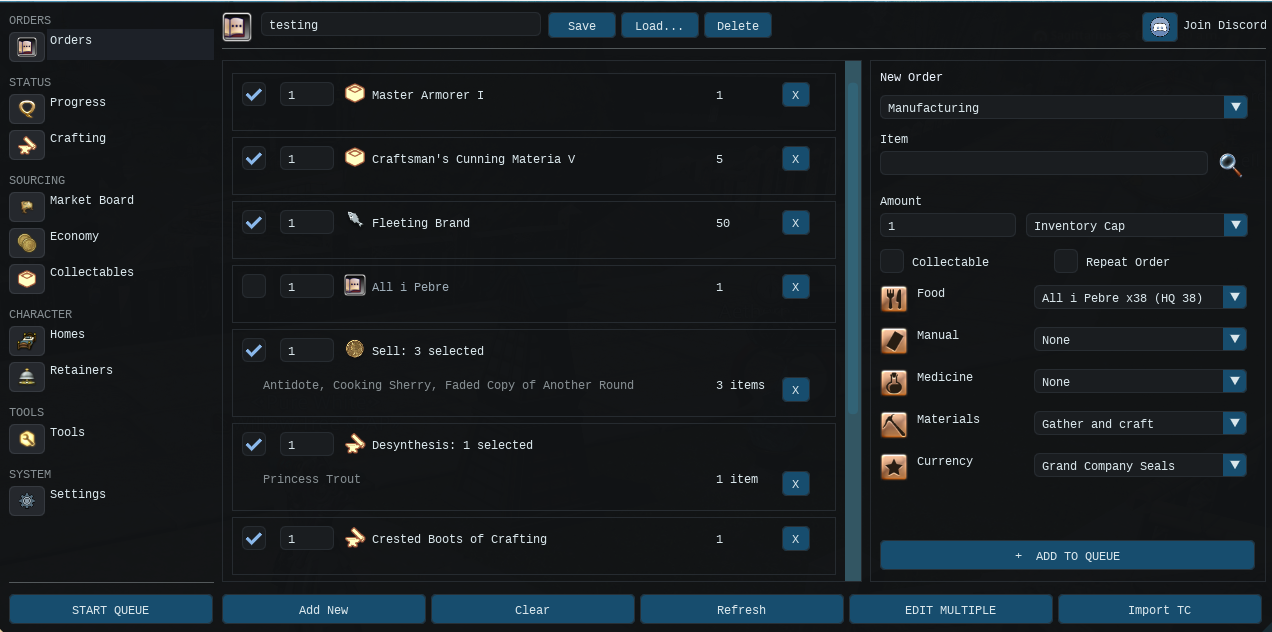
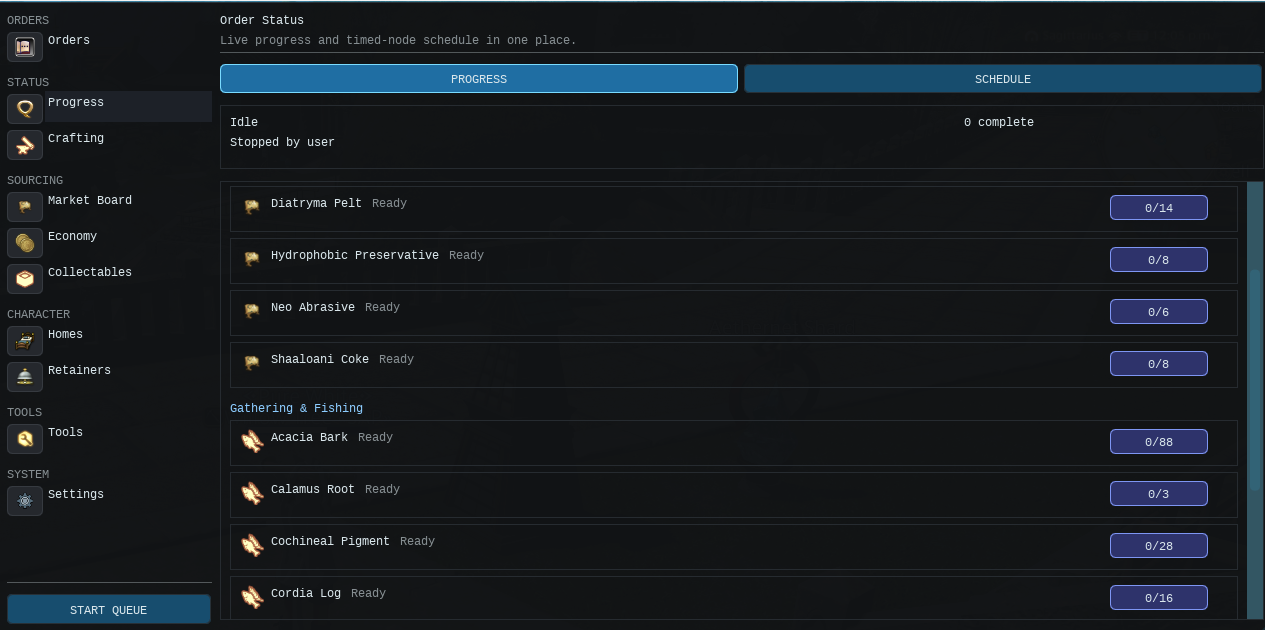
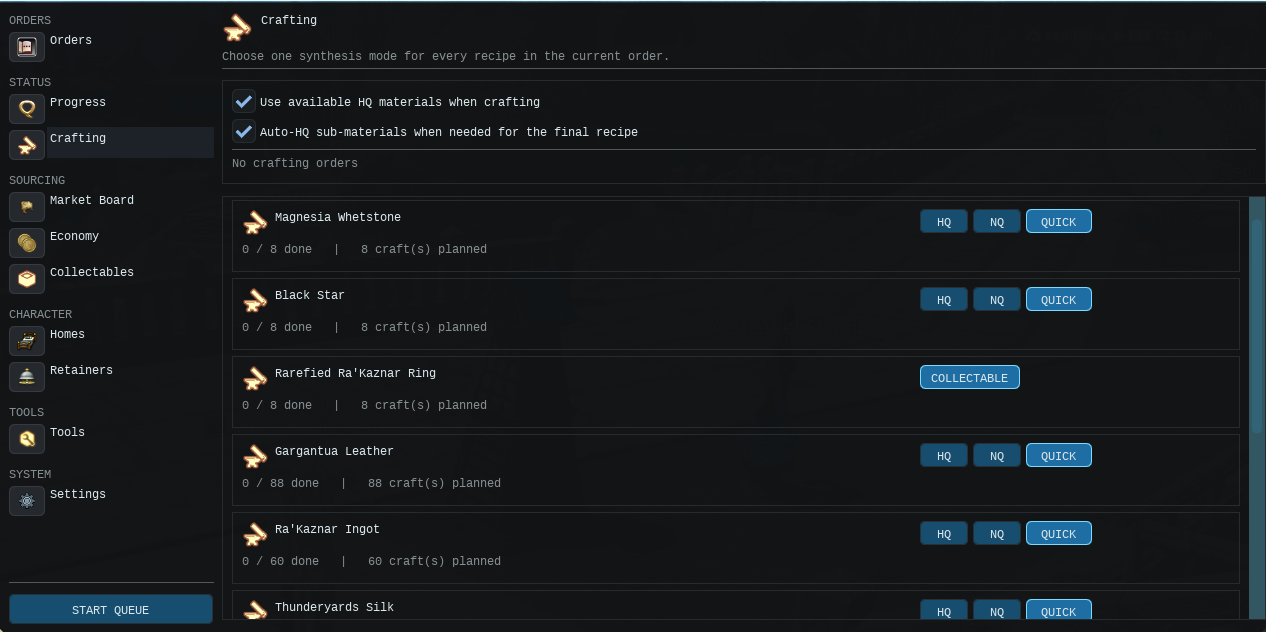
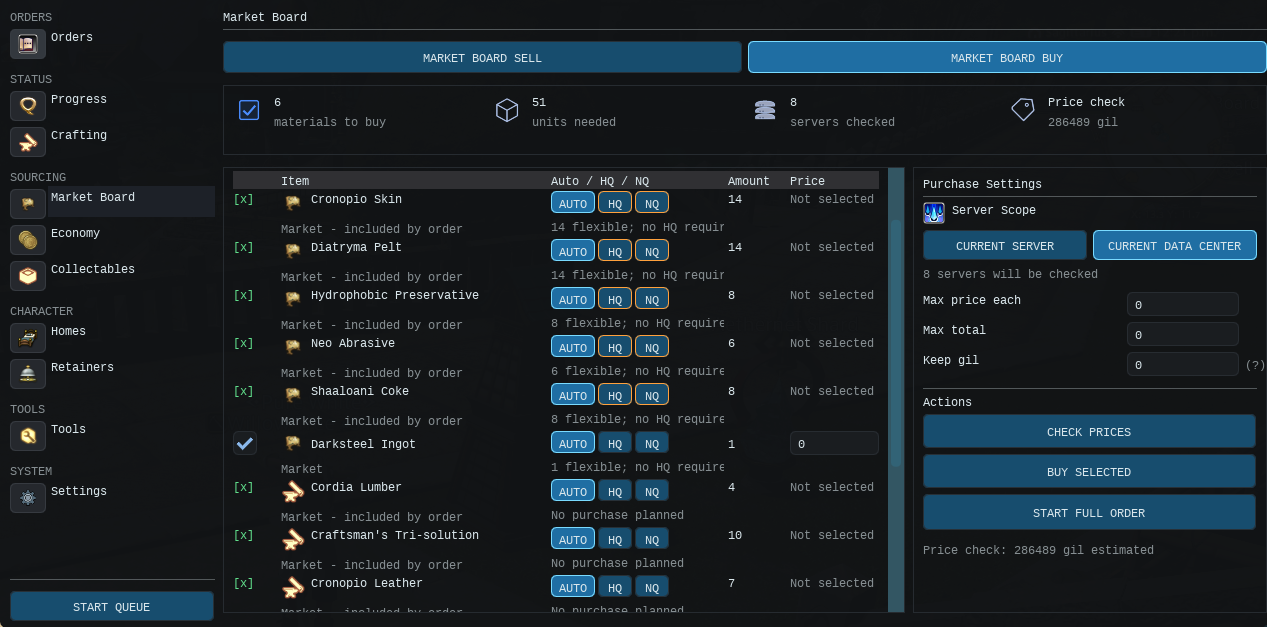
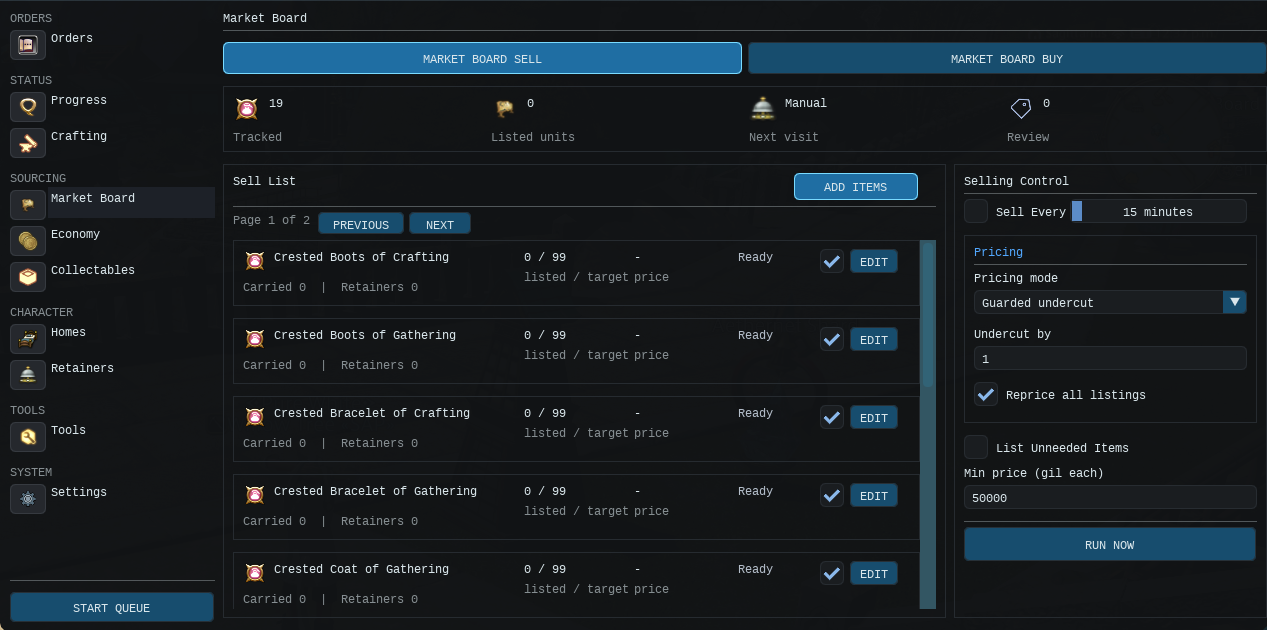
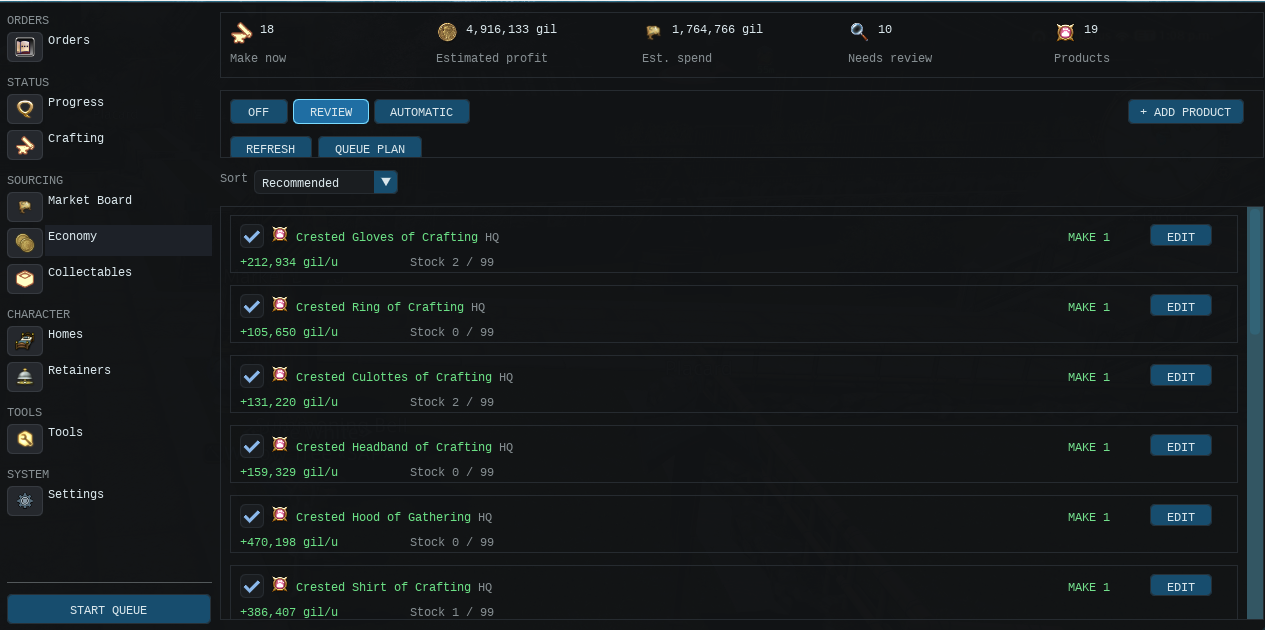
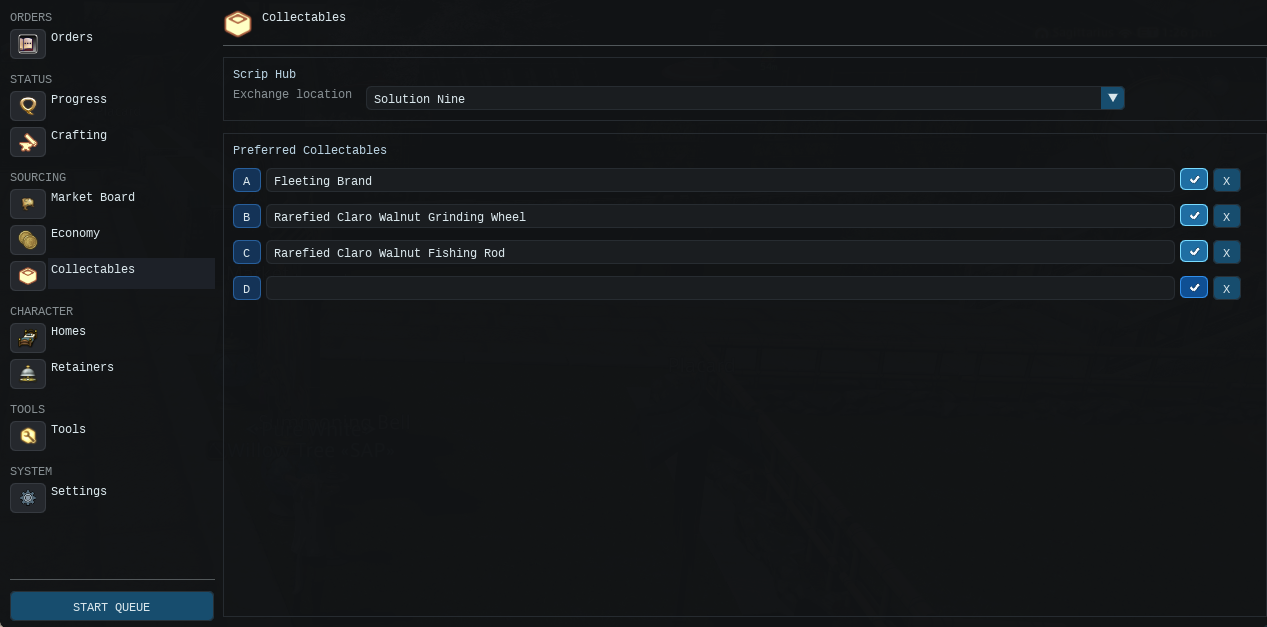
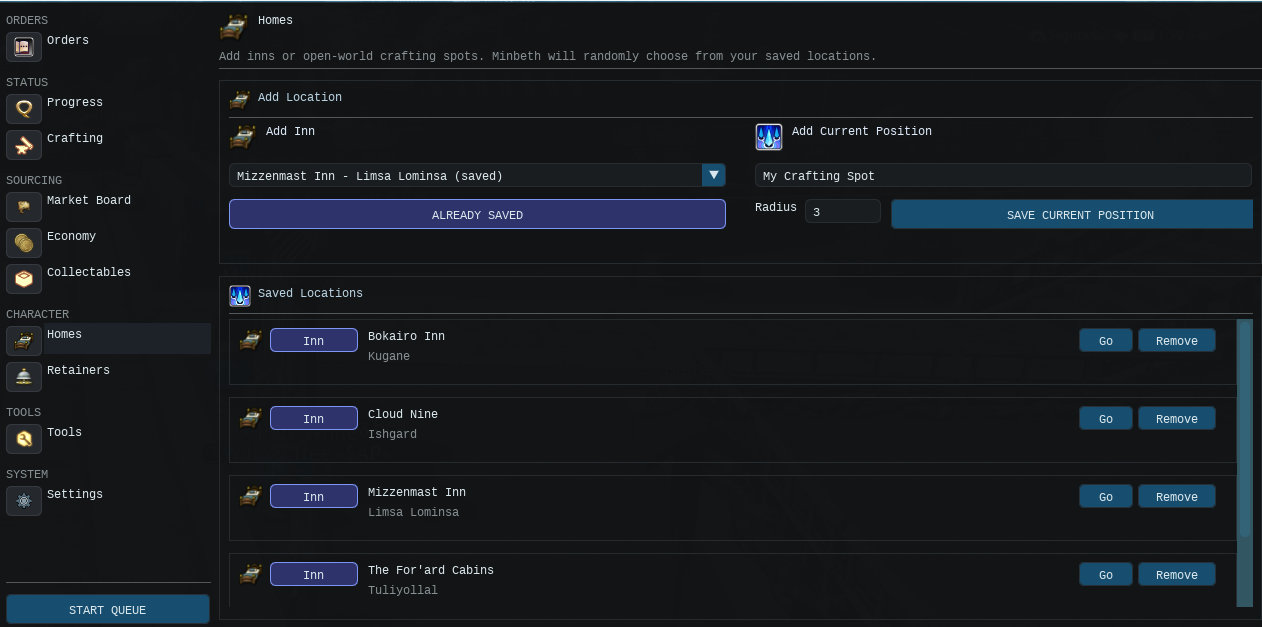
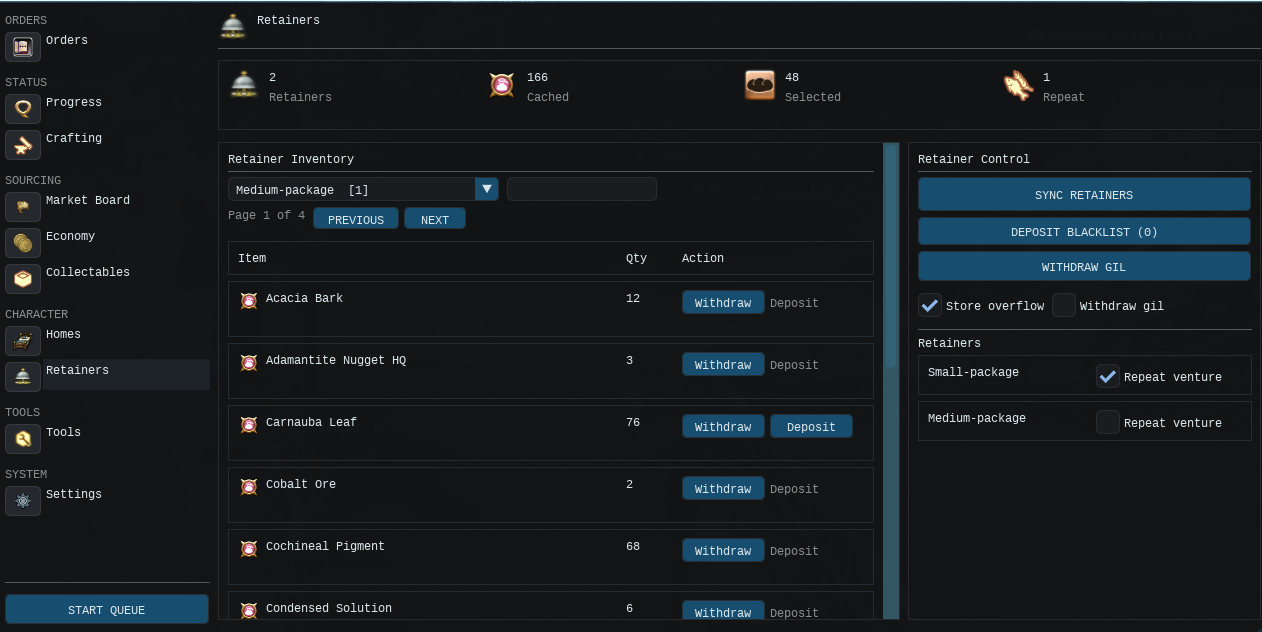
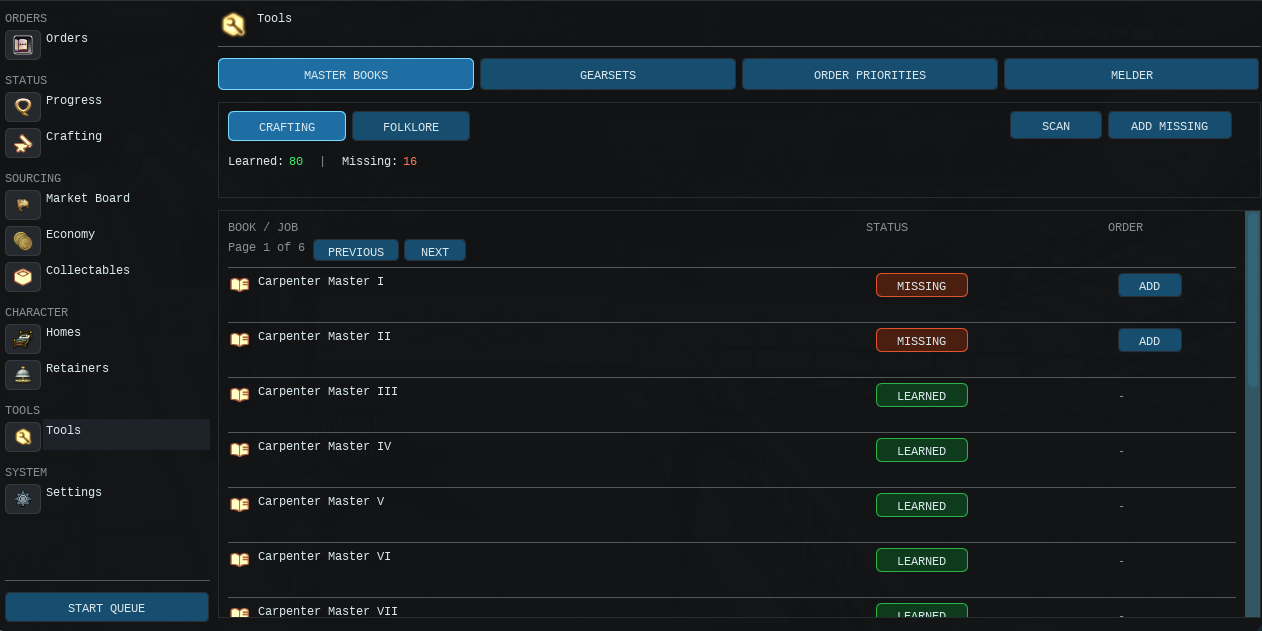
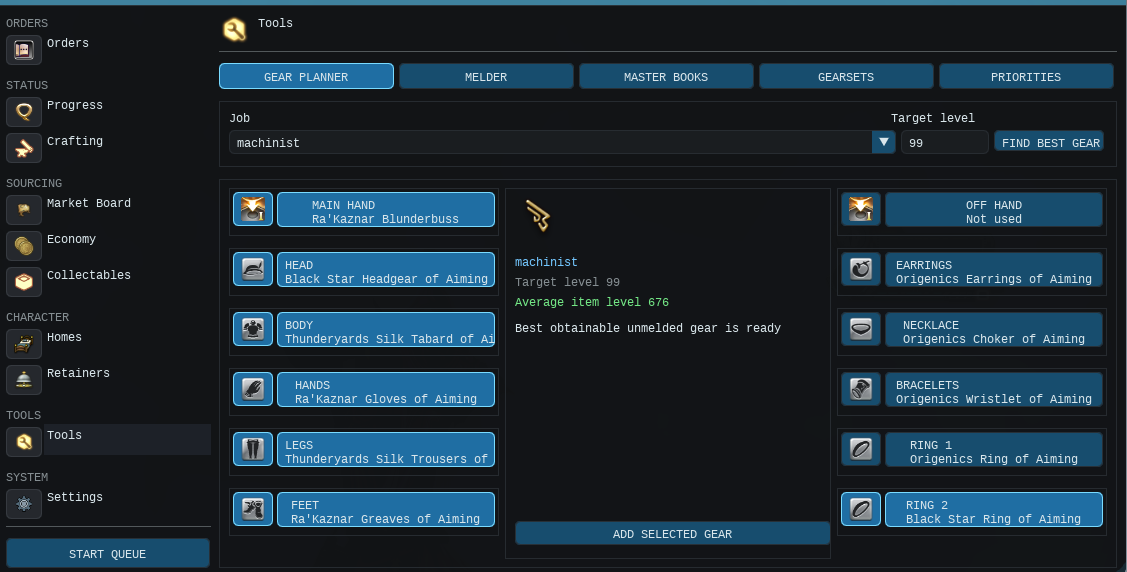
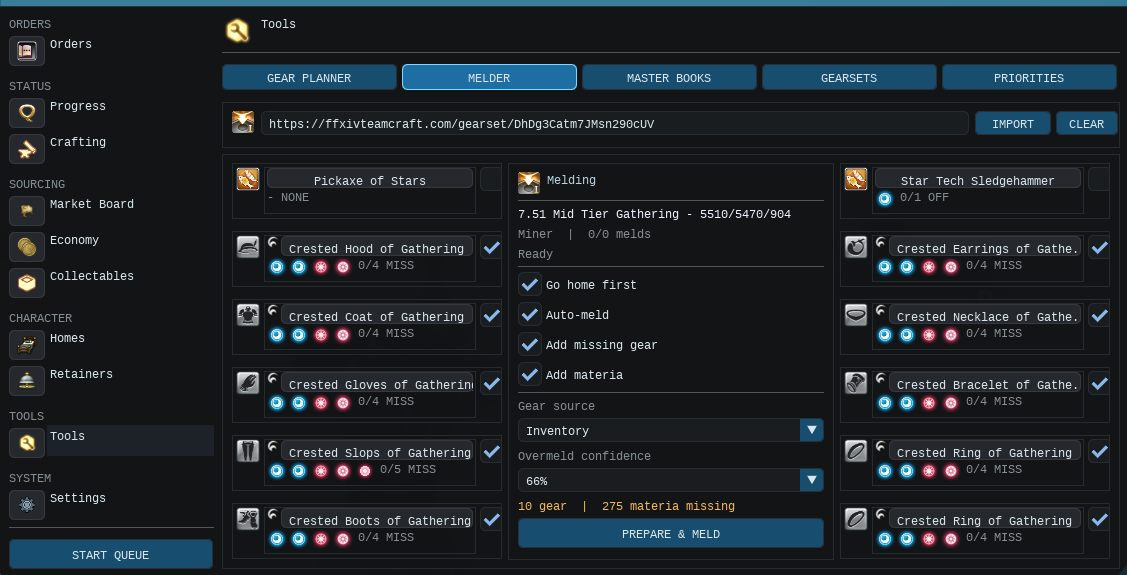
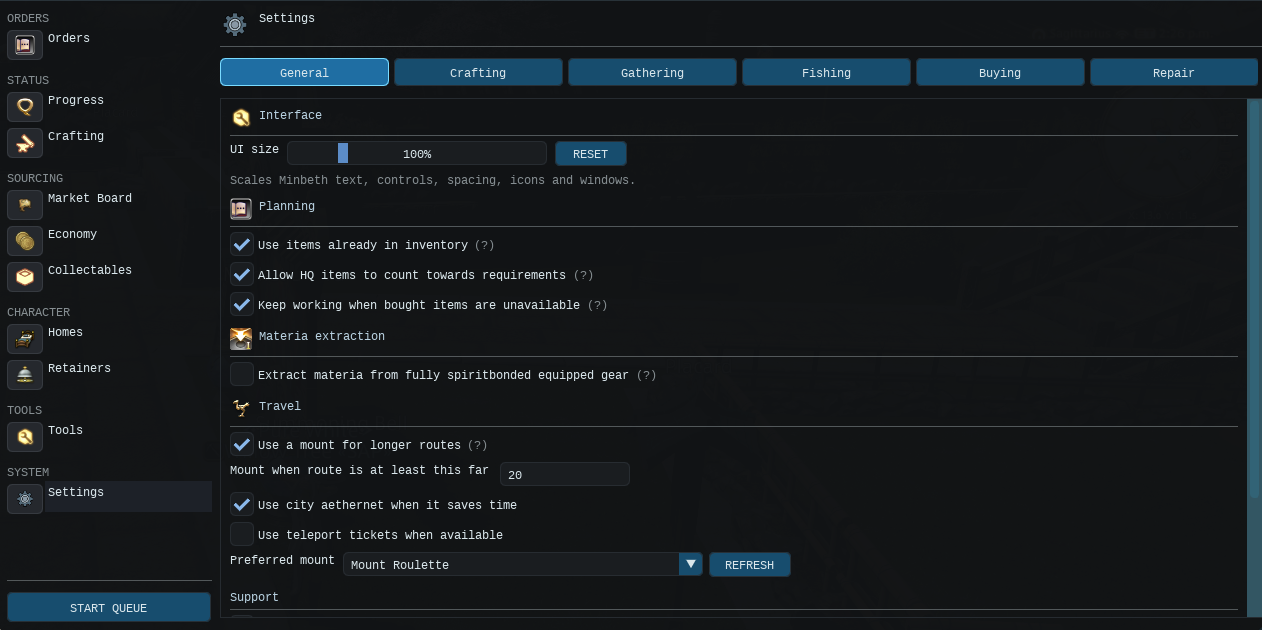
====== Minbeth ====== **Intelligent crafting, gathering and order automation** Minbeth takes care of the fiddly work behind larger crafting and gathering jobs. Tell it what you want, how many you need and which sources it is allowed to use. It will then work backwards through the full order. It checks your bags and retainer stock, works out recipes and materials, plans gathering and fishing, handles approved purchases, turns in collectables, repairs gear and switches jobs when needed. In simple terms: * You describe the finished result. * Minbeth builds the production plan. * You review the plan and spending limits. * Minbeth carries out the work. ===== What Minbeth Can Do ===== Minbeth's major systems include: * Multi-order manufacturing queues. * Recursive recipe and material planning. * Direct crafting through Cypher Craft. * Intelligent HQ intermediate planning for difficult recipes. * Miner and Botanist gathering. * Timed, unspoiled and ephemeral node scheduling. * Rod fishing and spearfishing. * Automatic bait, tackle and Mooch-chain planning. * Gatherer collectables, scrip turn-ins and exchanges. * Aetherial reduction for aethersands and related materials. * Vendor purchasing and controlled Market Board buying. * Retainer inventory discovery, withdrawal and overflow storage. * Teamcraft item-list and melding-plan imports. * Materia melding, including tracked overmeld attempts. * Master Book and folklore planning. * Equipment repair, materia extraction and travel assistance. * Sell, discard and desynthesis orders. * Progress, rate, ETA and timed-window displays. Minbeth will not use every source by default. You choose which sources are allowed, which ones should be used first and whether it is allowed to spend gil. ===== Requirements ===== * **Cypher Craft** for normal, HQ and collectable synthesis Optional integrations include: * **Teamcraft** item lists and gearset links for imports. * **Universalis** pricing for Market Board information and price-based inventory selection. * **ACR** for optional mob-drop farming through a supported combat routine. For smooth automation, also make sure that: * The required crafting, gathering and combat jobs are unlocked and suitably geared. * Saved in-game gearsets exist for jobs Minbeth may switch to. * Required zones, aetherytes, vendors and exchanges are unlocked. * There is enough free inventory space for the planned work. * Sensible gil limits are configured before Market Board buying is enabled. ===== Quick Start ===== For your first run, it is best to keep things simple: - Open **Tools > Gearsets** and import your current saved gearsets. - Open **Homes** and save a suitable crafting location, or add an inn. - Review **Settings**, especially Crafting, Gathering, Fishing, Buying and Repair. - Open **Orders** and create one small Manufacturing order. - Choose the quantity mode, amount and crafting mode. - Check **Tools > Order Priorities** and enable only the sources you are happy to use. - Open **Progress** and review how Minbeth intends to obtain every requirement. - Open **Market Board** if you want to approve any purchases and set price limits. - Press **Start Queue**. - Watch the first run so that you can confirm your saved locations, gearsets and preferences are correct. Start with one small order. Once you know your gearsets, locations and settings are working properly, you can move on to larger batches and timed materials. ===== The Big Idea: Orders Become Plans ===== Minbeth does more than open the final recipe and press Craft. It works through the recipe tree and adds everything needed to finish the order. A simplified plan looks like this: Final item -> required intermediate crafts -> required gathered materials -> required fish, vendor items or exchanges -> available inventory and retainer stock -> remaining shortfalls -> executable task list -> final synthesis At each stage, Minbeth checks what you already have before adding more work. Depending on your settings, it can count: * Carried NQ inventory. * Carried HQ inventory. * Cached retainer inventory. * Materials already allocated elsewhere in the queue. * Items expected from an earlier task. Sub-crafts are always completed before the recipe that needs them. Source priorities only change //how// an item is obtained. They do not let the final craft skip work that still needs doing. ===== Orders ===== {{:CysOrders.png?800|}} The **Orders** page is where you tell Minbeth what you want it to do. Add the item, choose the amount and set when the order should run. You can create Manufacturing, Sell, Discard and Desynthesis orders. You can also set quantities, choose the crafting result, group jobs into numbered batches, repeat regular jobs and save order lists as profiles. **You choose the end result. Minbeth works out the jobs needed to get there.** The order number decides which jobs are done first. ==== Manufacturing Orders ==== A Manufacturing order may include: * The item to produce. * The target amount. * A quantity mode. * Normal, HQ, Quick Synthesis or collectable behaviour where supported. * Food, medicine and manual selections. * A repeat option. * A run-order number. Search by item name, select the correct result and enter the required amount. Minbeth then resolves the item's recipe, unlock requirements and dependencies. ==== Quantity Modes ==== ^ Mode ^ What it means ^ Useful for ^ | **Inventory Cap** | Produce only enough to bring carried inventory up to the entered amount. Existing stock reduces the work. | Keeping a fixed amount ready. | | **Replenish** | Produce the entered amount in addition to stock already held. | Restocking after use or producing a fresh batch. | | **Retainer Sales** | Plan production against known retainer sale quantities so the configured amount can be maintained. | Keeping sale stock topped up. | Be careful when switching between Inventory Cap and Replenish. A target of 100 means very different things in each mode. ==== Run Order and Batches ==== The **Run Order** field controls priority between orders: * Lower numbers are completed first. * Orders sharing the same number are treated as one batch. * A higher-numbered batch begins after the lower-numbered batch has finished. For example: ^ Run Order ^ Example ^ Result ^ | 1 | Crafting food and medicine | Completed first. | | 2 | Two gear pieces | Planned and completed as the next batch. | | 3 | Sale stock | Begins after the gear batch. | Rows may also be enabled, disabled and rearranged without deleting the underlying order. ==== Repeating Orders ==== Manufacturing orders can be set to repeat. This works well for regular restocking, but make sure the quantity mode is correct. A repeating Replenish order asks for another full batch every time. An Inventory Cap order stops once the target amount is in your inventory. ==== Saved Profiles ==== Order sets can be saved as profiles in Minbeth's Profiles folder. Use profiles for regular production lists such as: * Weekly consumables. * Raid food and medicine. * Workshop materials. * Gathering supplies. * Sale-stock batches. Profiles can be saved, loaded, refreshed and deleted from the Orders interface. ==== Teamcraft Item Import ==== Minbeth can import the Items section of a Teamcraft list. A line such as: 1x Crested Gloves of Crafting becomes a Manufacturing order. Imported entries can be assigned to the chosen run order before the queue begins. ==== Sell Orders ==== A Sell order sells selected items to a normal shop NPC. It is **not** Market Board selling. You can select items from your inventory and from cached retainer stock. Retainer items are withdrawn together when possible, so the bell is not opened for every single stack. You can also prepare the selection before the items have been made. Price-based automatic selection may use Universalis limits, including: * A maximum value per individual item. * A maximum value for the entire stack. When both checks are enabled, both conditions must pass. ==== Discard Orders ==== Discard orders permanently destroy selected inventory items. They use a similar item-selection interface to Sell orders and may also use price thresholds to help identify low-value clutter. Discarding is irreversible. Check the selected item names, quantities and thresholds carefully before starting the queue. ==== Desynthesis Orders ==== Desynthesis orders process eligible carried items. Minbeth may travel to a saved crafting home first when that option is enabled, then desynthesise the selected items and return control to the queue. ===== Crafting and Cypher Craft ===== {{:CysCrafting.png?800|}} The **Crafting** page contains the main settings used by Manufacturing orders. This includes Cypher Craft, HQ materials, saved crafting homes and the food, medicine or manuals used while solving a recipe. Some orders can override these choices, but this page provides the normal defaults. Check these settings before starting an expensive endgame craft. Changes to your stats, food, medicine or HQ material settings can change how many HQ sub-items Cypher Craft needs for the final recipe. ==== Crafting Modes ==== The Crafting page lets you choose an mode for each recipe: ^ Mode ^ Behaviour ^ | **HQ** | Plans and executes the recipe with a simulator-proven full-quality route when possible. | | **NQ** | Completes the recipe without requiring an HQ result. | | **Quick** | Uses Quick Synthesis when the recipe and character support it. | | **Collectable** | Uses collectable synthesis behaviour for applicable recipes. | Minbeth starts Cypher Craft only while an actual synthesis is active and manages its lifecycle as the queue enters and leaves crafting. ==== Intelligent HQ Intermediate Planning ==== **For difficult recipes, Cypher Craft automatically decides how many intermediate items must be crafted as HQ in order to HQ the final recipe.** This does not mean every ingredient will be made HQ. Minbeth asks Cypher Craft to work out the smallest number of HQ sub-items needed for your recipe and current setup. It works like this: - Minbeth loads the final recipe, the selected crafting job and the current or calibrated stats. - Selected food, medicine and other relevant crafting effects are included. - Cypher Craft tests its known solution routes for the final recipe. - If full quality is proven from zero starting quality, Minbeth keeps the craftable intermediate items NQ. - If some starting quality is required, Cypher calculates the minimum quality contribution needed from ingredients. - Minbeth chooses the smallest whole-item combination of HQ-capable, craftable intermediates that reaches that requirement. - Those HQ requirements are then passed recursively into the relevant sub-crafts. - Everything else remains NQ unless another dependency genuinely requires HQ. An illustrative example: > A final recipe needs four crafted sub-items. Cypher Craft works out that only two need to be HQ for the final craft to reach full quality. Minbeth makes those two as HQ and leaves the other two NQ, saving time and materials. The exact count depends on the final recipe, ingredient quality values, job stats, consumables and the route Cypher can prove. ==== Why This Matters ==== Harder crafts can have several costly sub-crafts. Making all of them HQ wastes time, crystals and materials. Making too few may leave the final recipe short of full quality. Minbeth tries to get the balance right: * Enough HQ starting quality to prove the final HQ result. * No unnecessary HQ sub-crafts when NQ inputs are sufficient. * Recursive planning when an HQ intermediate itself has crafted ingredients. ==== Exact Calibration Before Crafting ==== For difficult HQ crafts, Minbeth may switch to the correct crafting job and let Cypher Craft check the real stats and selected consumables. The queue may show a preparation state while this happens. This is normal. Minbeth is checking that the final craft can be completed safely before it uses expensive materials. ==== Safe Fallback Behaviour ==== If Minbeth cannot read the recipe properly, check the character stats or find a proven Cypher route, it will not assume NQ materials are safe. Depending on the situation, it will: * Preserve craftable HQ intermediates conservatively. * Mark the HQ decision as unresolved. * Wait for exact calibration. * Refuse to begin the risky final craft until the requirement can be proven. Collectable and rarefied crafts do not consume HQ sub-materials merely to create starting quality. Their planning follows collectable-specific logic instead. ==== HQ Material Settings ==== The main HQ-related options are: * **Use HQ Materials** allows suitable HQ ingredients to be used. * **Automatic HQ Materials** lets Minbeth and Cypher work out the minimum HQ sub-items needed for a final HQ recipe. * **Allow HQ Inventory** lets HQ stock count towards requirements when it can be used. The Crafting and Progress pages show the resulting HQ requirement. Hover information explains why a particular count is required. ==== Quick Synthesis and Recovery ==== Quick Synthesis is handled in batches when possible. Minbeth also watches for damaged gear and stalled crafts. It can restart Cypher Craft or repair at a safe point before carrying on. ===== Gathering: Miner and Botanist ===== Minbeth can directly gather planned materials with Miner and Botanist when those source groups are enabled. It uses saved gearsets, known gathering data and live node scanning to: * Switch to the required gathering job. * Travel to the correct area. * Locate and approach usable nodes. * Land or dismount where necessary. * Select the requested item. * Continue through nearby node clusters after depletion. * Re-scan and patrol rather than assuming a single node remains available. ==== Normal and Timed Materials ==== The gathering planner distinguishes ordinary materials from restricted windows such as: * Unspoiled nodes. * Legendary or timed nodes. * Ephemeral nodes. * Weather- or time-restricted materials. Timed work appears on the **Schedule** tab with Eorzea Time windows, location and current status. Minbeth can complete other useful work while waiting, then move towards the timed material using the configured lead time. ==== Smart GP Management ==== When **Smart GP** is enabled, Minbeth decides when GP is worth spending instead of using every available action straight away. It can: * Spend GP on useful yield or chance improvements. * Preserve GP for a higher-priority timed or collectable node. * Use cordials for meaningful windows rather than consuming them continuously. * Account for the needs of upcoming work shown in the schedule. ==== Collectable Gathering ==== For gatherer collectables, Minbeth uses the actions that suit the selected item. **Maximise Node** tells it to get as much useful value as it can from each limited node. When inventory space becomes low, Minbeth can divert at a safe boundary, turn in carried collectables, free space and resume the original route. ==== Automatic Gatherer Scrip Routes ==== Minbeth can automatically choose suitable Purple or Orange gatherer-scrip collectables. It rotates through available timed windows and uses hubs that contain both: * A Collectable Appraiser. * The required Scrip Exchange. The Collectables page also provides preferred-item slots. Leave them blank for automatic selection, or fill them when you want Minbeth to favour particular collectables. Before reaching the 4,000-scrip cap, Minbeth can spend scrips on planned exchange items and then continue gathering. ==== Aetherial Reduction ==== When an order needs an aethersand or another reduction result, Minbeth may plan the complete chain: - Identify the relevant ephemeral collectable. - Wait for and gather it. - Purify or prepare the collectable as required. - Perform Aetherial Reduction. - Feed the resulting material into the original order. This keeps aethersands inside the same order instead of leaving them as a separate job for you to sort out. ==== Shards, Crystals and Clusters ==== Elemental catalysts are treated as planned resources. The Progress page can offer a location selector where several gathering areas are known. Leave the selection automatic or choose a preferred area for that element. ===== Fishing ===== Fishing is divided into rod fishing and spearfishing, with each method using its own route and decision logic. ==== Rod Fishing ==== For supported fish, Minbeth can use: * Recorded fishing banks and packaged fishing locations. * Known bait and tackle requirements. * Mooch chains. * Precision or Powerful Hookset recommendations. * Patience. * Identical Cast. * Chum. * Mooch. * Optional sitting between casts. The Progress page can provide a bait override when several valid options exist. ==== Bait and Tackle Sourcing ==== If bait is missing, Minbeth can add it to the plan like any other material. When the source is known and enabled, it can get the bait from a vendor, gathering route, the Market Board or another supported source. You may also configure stock targets so the route does not arrive with only one piece of bait and immediately run dry. ==== Fishing Fatigue and Bank Rotation ==== Fishing in one spot for too long can cause fatigue. Minbeth can move to another known bank after a set period, usually between casts. It will not interrupt an active catch just because the timer has run out. ==== Spearfishing ==== For supported spearfishing targets, Minbeth can: * Dive and locate Teeming Waters. * Track fish across all three lanes. * Consider movement speed, direction and shadow size. * Lead the Gig timing rather than aiming only at the current fish position. * Follow Swimming Shadows chains when required. Restricted fish and relevant availability windows can also appear in the Schedule view. ===== Tools ===== {{:CysTools.png?800|}} The **Tools** menu contains the extra setup pages used by Minbeth. Orders tell it what to make. Tools tells it which gearsets, locations and methods it should use. The menu includes: * **Order Priorities** lets you choose which material sources are allowed and which should be tried first. * **Gearsets** imports the saved in-game gearsets used for crafting, gathering and combat jobs. * **Homes** saves suitable crafting locations and recognised inns. * **Melder** imports and runs supported Teamcraft materia plans. * **Master Books and Folklore** checks recipe and gathering unlocks and can add missing requirements to Orders. * **Repair** checks durability, Dark Matter and the repair methods available to your character. Most of these tools are for setup rather than making an item directly. Check them before your first large order, after changing gearsets, after learning new books or whenever you change how materials should be sourced. ===== Source Priorities ===== Open **Tools > Order Priorities** to decide how Minbeth should obtain missing materials. The default source groups include: ^ Source ^ Purpose ^ Notes ^ | **Purchase** | Vendor purchases and explicitly approved Market Board buys. | Market Board items still require individual approval. | | **Gather** | Miner and Botanist materials. | Includes direct nodes and cluster patrols. | | **Fisher** | Rod fishing and spearfishing. | Uses bait, skill and Mooch information where known. | | **Carpenter** | Carpenter sub-crafts. | Direct synthesis through Cypher Craft. | | **Blacksmith** | Blacksmith sub-crafts. | Direct synthesis through Cypher Craft. | | **Armorer** | Armorer sub-crafts. | Direct synthesis through Cypher Craft. | | **Goldsmith** | Goldsmith sub-crafts. | Direct synthesis through Cypher Craft. | | **Leatherworker** | Leatherworker sub-crafts. | Direct synthesis through Cypher Craft. | | **Weaver** | Weaver sub-crafts. | Direct synthesis through Cypher Craft. | | **Alchemist** | Alchemist sub-crafts. | Direct synthesis through Cypher Craft. | | **Culinarian** | Culinarian sub-crafts. | Direct synthesis through Cypher Craft. | | **Exchange** | Scrip and token exchanges. | May include collectable turn-ins first. | | **Mob Drops** | Supported monster-drop farming. | Optional and disabled by default. | Use the arrow controls to move preferred sources up or down, and disable any source you do not want used. Priority only changes which source Minbeth tries first. It will still finish required sub-crafts before the final recipe and it will still ask for Market Board approval. ===== Progress and Schedule ===== {{:CysProgress.png?800|}} The **Progress** page shows the work behind each order. A single finished item may need several ingredients, sub-crafts, gathering trips, fish, purchases, retainer withdrawals or exchanges. They are all shown here. Check this page before starting a large queue to make sure every important material has a valid source. While the queue is running, it also helps explain why Minbeth is waiting. It may be waiting for a timed node, Cypher Craft, GP recovery or missing bait rather than being stuck. For each requirement it can show: * Item and source type. * Owned amount and target amount. * Queued, Waiting, Running or Unavailable state. * Current production or gathering rate. * Estimated completion time after enough enough data has been collected. * HQ quantity required by Cypher's final-craft calculation. * Fishing bait choice. * Catalyst gathering-area choice. * Current collectable or scrip route. * Retainer-withdrawal information. Requirements that are already satisfied are normally hidden so the page focuses on work that remains. Fishing estimates take longer to appear because catch rates can vary. Minbeth waits for enough casts before showing an ETA, rather than guessing from one lucky catch. ==== The Schedule Tab ==== The Schedule tab shows upcoming timed work. It can include: * Current Eorzea Time. * Active windows. * Upcoming windows. * Later planned windows. * Area and node information. * Planned quantity. * GP or scrip context. * Blocked bait or route requirements. Use it to see why Minbeth is waiting and what it intends to do next. ===== Market Board and Vendors ===== {{:CysMinMB.png?800|}} The **Market Board** page gives you control over what Minbeth is allowed to buy. Missing items are not bought automatically. You choose the items, set the price limits and decide how much gil must be kept back. Always check the quantity, world or data centre, unit price and estimated total before pressing **Buy Selected** or starting a full order with buying enabled. Vendor purchases use separate settings. Known vendor items can be bought automatically when that option is enabled. Market Board items still need your approval and must stay within your limits. ==== Vendor Purchasing ==== Known vendor items can be purchased automatically when vendor buying is enabled. Minbeth travels to the recorded vendor and buys the amount still required by the plan. You can place vendor buying ahead of gathering. This can save time on cheap ingredients, but leave gathering first if you would rather collect them yourself. ==== Market Board Buying ==== Market Board spending needs your approval. Minbeth will not quietly buy every missing item. The Market Board page provides selection tools such as: * **Missing** selects the missing materials shown in the plan. * **MB Only** selects items with no currently known gathering or crafting route. * **Clear** removes the current selection. You must also enable **Allow Buying**. For every selected item, set an acceptable unit-price cap. Global safeguards include: * Maximum price per item. * Maximum total purchase cost. * Gil reserve that must remain untouched. A value of zero disables the relevant limit, so do not leave zeroes unintentionally when you expect a cap. ==== Server Scope ==== Market checking may be limited to: * The current world. * The current data centre. When data-centre scope is used, Minbeth can compare selected worlds and form a cross-world purchase plan. The interface shows the cheapest known world, unit price, shortfall, estimated total and the amount actually spent. Available actions include: * **Check Prices** * **Buy Selected** * **Start Full Order** If a selected listing is no longer available, **Continue on Market Failure** lets Minbeth carry on with other jobs instead of stopping the whole queue straight away. ==== Market Board Selling ==== **Automated Market Board selling is not currently available in this build.** The Sell order sends items to an ordinary shop NPC. The Retainer Sales quantity mode can plan production against known sale stock, but it should not be confused with an automatic listing system. ===== Collectables and Exchanges ===== {{:CypsCol.png?800|}} The **Collectables** page controls gatherer collectables and scrip routes. Leave the preferred slots empty and Minbeth will choose a suitable Purple or Orange scrip item. You can also choose a specific collectable when you want it to follow the same route each time. This is also used when a Manufacturing order needs an item bought with scrips. Minbeth can gather the collectable, visit the appraiser, turn it in, check the scrip total and buy the exchange item before returning to the original order. Minbeth can combine several steps into one route: - Produce or gather the collectable. - Travel to an suitable hub. - Turn it in to a Collectable Appraiser. - Track the resulting scrips. - Purchase the required reward from the Scrip Exchange. - Return the reward to the original dependency plan. A valid automated scrip hub needs both the appraiser and exchange required by the route. Preferred collectable slots are optional. Leave them empty to allow automatic selection from currently eligible Purple or Orange scrip items. ===== Retainers ===== {{:RetainerCys.png?800|}} The **Retainers** page shows a cached list of the items stored on your retainers. Minbeth can use this stock before it gathers, crafts or buys replacements. Use **Sync All** after moving a lot of items by hand so the cache stays up to date. You can search stored items, refresh one retainer, withdraw or deposit stock, assign roles, repeat supported ventures and set up overflow storage. Where possible, Minbeth handles several items during the same bell visit. ==== Synchronising Retainers ==== Use **Sync All** to visit known retainers and refresh their inventory information. Individual retainers can also be refreshed separately. The cached view includes information such as: * Item name. * NQ or HQ state. * Stack amount. * Retainer location. A cache is only as accurate as its last sync. Refresh it after large manual inventory changes. ==== Using Retainer Stock in Orders ==== When enabled, the planner counts cached retainer stock before gathering, crafting or buying replacements. During execution Minbeth withdraws the required amount, subject to inventory capacity, and then continues with the remaining shortfall. This is handy for materials such as ores, cloth, lumber, bait and materia. ==== Manual Withdrawal and Deposit ==== The interface can search retainer inventory and withdraw or deposit selected items. Operations are grouped sensibly so Minbeth does not need to reopen the bell for every single unit. ==== Retainer Roles and Overflow Storage ==== Retainers may be assigned organisational roles such as: * Materials. * Glamour. * Housing. * Rare items. * Bait. * Materia. When low-space overflow handling is enabled, Minbeth can move carried items that are not required by the current order into a Materials retainer. Shards, crystals and clusters are protected from casual overflow movement. ==== Ventures ==== A retainer may be set to repeat its current venture. Minbeth can collect the result and reassign the same venture when visiting the bell. **Repeat Now** performs the action on demand for an eligible retainer. ==== Gil Withdrawal ==== Minbeth can withdraw gil from cached retainers, either manually or as part of the configured automation flow. ==== Balance and Rules Caveat ==== Retainer balancing and rules are limited in this build. The page may show suggested moves or previews, but it will not automatically reorganise everything. Treat these parts as planning tools for now. ===== Homes ===== Homes are safe locations Minbeth can use before longer crafting or utility work. You can: * Add a recognised inn. * Save the current open-world position as a crafting home. * Give the location a name and usable radius. * Travel to a saved home manually. * Remove outdated entries. * Let Minbeth choose randomly from several saved homes. Choose a crafting home that is easy to reach, fairly quiet and clear of awkward scenery. Minbeth can travel there before crafting, desynthesis or melding when the setting is enabled. ===== Gearsets ===== Open **Tools > Gearsets** and import the character's current saved gearsets. Minbeth stores the relationship between a job and its gearset slot so it can switch jobs during a plan. Gearsets are important for: * All eight crafting jobs. * Miner, Botanist and Fisher. * Optional combat jobs used for mob drops. After deleting or rearranging in-game gearsets, refresh Minbeth's gearset mapping before starting a complicated queue. ===== Materia Melding ===== The **Melder** tool can import a Teamcraft gearset link and compare the target melds with the equipment currently available to the character. ==== Gear Matching ==== Minbeth searches configured sources such as: * Equipped gear. * Armoury Chest. * Carried inventory. The Gear Plan shows whether an item was found, how many melds remain and whether it is complete or needs review. ==== Materia Requirements ==== The Materia tab calculates: * Required materia by type and grade. * Amount currently owned. * Amount already queued. * Estimated missing amount. Missing materia can be added to the normal Orders queue, allowing the standard planner to find supported sources. ==== Overmelding Estimates ==== Overmelds are based on chance, so Minbeth estimates how many attempts may be needed. This is only a planning figure and cannot guarantee how many materia will be used. As the melder runs, real success and failure results replace estimates so remaining requirements become more accurate. Controls include Start, Pause, Resume and Stop. Minbeth can also begin a ready melding plan when the main queue is idle and the next required materia is available. ==== Spiritbond and Materia Extraction ==== When enabled, Minbeth can extract materia from fully spiritbonded gear at a safe point and then continue the order. Gear that needs checking is marked for review instead of being changed automatically. ===== Master Books and Folklore ===== Open **Tools > Master Books** to review crafting Master Books and gathering folklore tomes. The page separates crafting and folklore entries and reports states such as: * **Learned** * **Missing** * **In Bags** * **Unknown** Use **Add Missing** to add the supported acquisition requirements to Orders, or add individual books selectively. A book that is already in your bags must normally be used manually in-game. After using it, refresh or scan again so Minbeth can confirm that the recipes or gathering information are unlocked. When a recipe needs a book you have not learned, Minbeth can block the route and show the missing unlock instead of trying to craft it anyway. ===== Repairs ===== Minbeth can monitor equipment durability and repair at safe boundaries during an order. Available modes are: ^ Mode ^ Behaviour ^ | **Smart** | Prefer self-repair with Dark Matter, then use an NPC mender when necessary. | | **Dark Matter Only** | Use self-repair and do not fall back to an NPC. | | **NPC Mender Only** | Travel to a verified mender and pay for repairs. | Settings include: * Durability threshold. * Dark Matter reserve. * Automatic Dark Matter purchasing. * NPC fallback behaviour. Self-repair requires the relevant crafting job levels. The Repair page can scan equipped gear, show items below the threshold, calculate Dark Matter requirements and identify missing job capability. Manual controls include **Scan Gear Now**, **Repair Now** and **Cancel**. If repair becomes necessary during fishing, gathering or crafting, Minbeth attempts to leave the current activity at a safe point, perform the repair and resume the interrupted plan. ===== Travel and Navigation ===== Most parts of Minbeth need to travel at some point. It can use: * Teleporting between known areas. * City aethernet routes when they save time. * Mounting when the distance justifies it. * Flying and controlled landing. * Diving for underwater routes. * World Visit travel for approved cross-world Market Board plans. * Recovery logic when movement becomes stuck or a route needs to be reacquired. The mount-distance threshold and city-aethernet preference can be adjusted in Settings. ===== Mob Drops ===== Mob-drop farming is optional and disabled by default. When a supported item has known mob data, Minbeth can switch to a saved combat gearset and use the selected ACR to farm it. CypherCore Rotations can be used for combat. Enable this source only after confirming: * The correct combat gearset. * A working combat routine. * Suitable search and combat ranges. * That the required mob source is supported. If no executable mob route is known, the item remains unavailable or must be obtained from another enabled source. ===== Consumables ===== Crafting and gathering consumables may be set globally, with per-order overrides where provided. Crafting selections can include: * Food. * Medicine or tea. * Manuals. Gathering can use its own food selection and cordial settings. Cypher Craft includes the selected consumables when checking HQ requirements. A recipe may need a different number of HQ sub-items depending on whether food or medicine is active. Minbeth checks owned stock before attempting to use a selected consumable. Keep enough available for long batches, particularly when repeating orders. ===== Settings Worth Reviewing ===== ==== General ==== * Use carried inventory in plans. * Allow HQ inventory to satisfy requirements. * Continue with other work after a Market Board failure. * Automatic materia extraction. * Mount and aethernet preferences. * Logging options. ==== Crafting ==== * Enable direct crafting. * Craft at a saved home. * Cypher Craft integration. * Use HQ materials. * Automatic HQ material calculation. * Global food, medicine and manual. * Low-space collectable turn-in. ==== Gathering ==== * Enable direct gathering. * Use cordials. * Smart GP. * Automatic scrip routes. * Aetherial reduction. * Maximise limited nodes. * Timed-node travel lead. ==== Fishing ==== * Enable direct fishing. * Smart fishing profiles. * Recommended hooksets. * Patience, Mooch, Identical Cast and Chum. * Sitting between casts. * Automatic bait sourcing. * Bait stock targets. * Fishing-bank rotation. ==== Buying ==== * Automatic vendor purchasing. * Prefer vendors over gathering. * Continue after unavailable Market Board purchases. * Market Board scope and gil safeguards. ==== Repair ==== * Repair mode. * Durability threshold. * Dark Matter reserve. * Buy missing Dark Matter. * NPC fallback. ===== Understanding Queue States ===== ^ State ^ Meaning ^ | **Queued** | The requirement has an executable task waiting in the plan. | | **Waiting** | The route exists, but Minbeth is waiting for a condition such as time, weather, GP, calibration or another dependency. | | **Running** | Minbeth is actively carrying out that task. | | **Unavailable** | No currently executable route can satisfy the requirement with the enabled sources and known data. | An unavailable item does not always stop the queue straight away. Minbeth can finish other jobs first and leave the blocked item visible. The missing route must still be fixed before the final order can finish. Common causes include: * The relevant source is disabled. * A required gearset is missing. * The recipe or folklore book is not unlocked. * No verified node, fishing bank, vendor or mob route is known. * Required bait cannot be sourced. * Market Board buying has not been approved. * The unit-price or total-cost cap rejects available listings. * Cypher Craft cannot yet prove the HQ route. * A timed or weather window has not opened. ===== Practical Tips ===== * **Test small first.** One item exposes bad gearsets or locations without committing to a huge batch. * **Import every relevant gearset.** Job switching is only as reliable as the mapping Minbeth has been given. * **Save a good crafting home.** Avoid ledges, cluttered interiors and places where movement can be obstructed. * **Sync retainers before a large plan.** Old cache data may make Minbeth expect materials that have already been moved. * **Set real gil limits.** A zero limit disables that safeguard. * **Keep some free bag space.** Complex orders may temporarily hold intermediates, collectables, bait and purchased items together. * **Stock utility items.** Cordials, Dark Matter and frequently used bait prevent avoidable diversions. * **Review the Schedule.** A queue that appears idle may be correctly waiting for the next Eorzea Time window. * **Read the HQ explanation.** It tells you why Cypher requested a particular number of HQ sub-items. * **Set source priorities to suit you.** Cheap vendor items may be worth buying, while rarer materials may be better gathered. * **Watch the first run after an update.** Routes, settings and UI behaviour may have changed between builds. * **Keep logs enabled while testing.** The main console log is useful when reporting a route, planner or execution problem. ===== Known Limitations in This Build ===== * Automated **Market Board selling** is not available. * Retainer **Balance Inventory** may show suggestions without carrying out every move. * Retainer **Rules** are currently previews and will not freely reorganise all stored items. * A Master Book or folklore tome already in the bags may need to be used manually before Minbeth can recognise the unlock. * Direct automation depends on verified location and source data. Unsupported nodes, banks, vendors, exchanges or mobs may remain unavailable. * Mob-drop farming is optional, disabled by default and depends on a working combat profile and supported source. * Exact final-HQ planning may pause for Cypher calibration or block an expensive craft when a safe solution cannot be proven. * Universalis data can be delayed or missing. Price checks are only as current as the information available. ===== Frequently Asked Questions ===== ==== Why is Start Queue waiting instead of moving? ==== Minbeth may still be building the dependency plan, refreshing inventory, switching to the required job, waiting for Cypher's exact HQ calibration or watching for a timed window. Check the Progress and Schedule tabs before assuming it is stuck. ==== Why is Minbeth crafting some intermediates as HQ but not all of them? ==== That is how the Cypher HQ system is meant to work. It finds the smallest number of HQ sub-items needed for the final recipe. Anything that does not need to be HQ stays NQ. ==== Why are all of the intermediates NQ for an HQ final craft? ==== Cypher has proved that the final recipe can reach full quality from zero starting quality with the current stats, consumables and route. HQ sub-items would therefore be unnecessary. ==== Why is Minbeth making more HQ intermediates than I expected? ==== Your current stats or consumables may need more starting quality. Minbeth may also be playing it safe because an exact route is not available. Hover over the HQ requirement in Progress to see the reason. ==== Why did Minbeth change to a crafter before beginning the queue? ==== It may be reading your exact stats and asking Cypher Craft to solve the final recipe before using any materials. This is part of the HQ check. ==== Why will it not buy a missing item? ==== Market Board buying must be enabled, the individual item must be selected, and an available listing must pass the unit, total and gil-reserve limits. Vendor buying has its own enable and priority settings. ==== Why is an item marked Unavailable when it exists in the game? ==== Minbeth needs more than the item simply existing in the game. It also needs an enabled source and usable data for the recipe, node, fishing bank, vendor, exchange or mob. A missing unlock, gearset or bait can also block it. ==== Why is a fish waiting? ==== Check its bait, bank, time, weather and Mooch-chain requirements. The Schedule tab and bait selector usually reveal the missing condition. ==== Why does a book say In Bags rather than Learned? ==== The item is present but its unlock has not yet been confirmed. Use the book manually in-game, then refresh the Master Books page. ==== Does Minbeth count materials I already own? ==== Yes, when the required inventory settings are enabled. It can count carried NQ stock, permitted HQ stock and cached retainer inventory before creating new work. ==== Can Minbeth keep working when one route fails? ==== It can continue with other executable tasks when the plan and settings allow it, including the option to continue after a Market Board failure. It cannot complete the final order while a required dependency remains unresolved. ==== What happens when I stop the queue? ==== The active job stops. When you start the queue again, Minbeth checks your current inventory and rebuilds the remaining plan from what has already been completed. ===== Final Notes ===== Minbeth works best when it has accurate gearsets, up-to-date retainer information, clear source priorities and proper spending limits. Once those are set, it can handle the recipe tree and work through the crafting, gathering, fishing, buying and exchange jobs in the right order. For difficult HQ recipes, Cypher Craft works out how many HQ sub-items are actually needed. Minbeth will make that amount instead of wasting time making every possible ingredient HQ.